

Reflections on Edinburgh Fringe, independent producing and finding a place in a crowded market.

From the classroom to the company
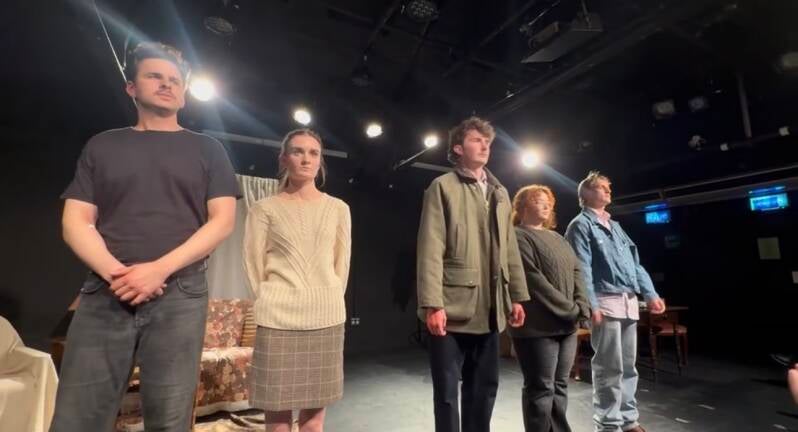
Two years ago, I founded Fifth Act Company as an outlet to create theatre beyond the confines of an academic setting. At the time, I was a second-year student preparing to enter my final year studying Drama, Theatre and Acting, where during that time I had reached a point where I wanted more opportunities to perform and create work on my own terms. Whilst university gave me the opportunity to develop as a performer, I still always felt that working towards assessments and prescribed marking criteria could sometimes feel restrictive. I wanted the freedom to experiment, create and perform without that restrictiveness every project being shaped around an assessment brief. The Fifth Act began as a way of making that possible. That ambition became more tangible when we began workshopping William Street. Although the project originated within a university module, it felt different from the work we had undertaken previously. Written by Chloe, the play (William Street) gave us the opportunity to engage more profoundly with the material and have a greater say in how the production developed. Even before we had finished bringing the show to its feet, I knew I wanted to take it further. What had begun as an opportunity to create work beyond the classroom was becoming something with potential beyond what we had ever imagined.
The leap to Edinburgh
After months of workshopping William Street, we staged a one-off performance for friends and family in November. It was the first time we had put the show in front of an audience, and its warm reception made all those late nights, rehearsals and hours spent building the set feel worthwhile. We had created something that people connected with, and I didn't want that to be the end of its journey. By February, conversations about taking the production further had begun, and we found ourselves looking towards Edinburgh Fringe. We were ambitious, perhaps a little naive, and certainly aware that it wasn't the most financially comfortable decision for a young theatre company. But we believed in the work and wanted to see how far we could take it. Before Edinburgh, we secured a week-long run at the Burton Taylor Studio at Oxford Playhouse in May. This run gave us valuable experience, some financial backing and reviews that would later support our Fringe marketing. It was an important stepping stone between creating a show at university and taking it into the wider theatre industry.
More than the performances
When I reflect on our time at Edinburgh Fringe, it isn't necessarily the performances themselves that stand out most, but the environment surrounding them. For a few weeks, you find yourself immersed in a city full of like-minded performers, writers, producers and creatives, all bringing their own work to life. What I loved most was the accessibility of it all. There was so much theatre to discover, so many different approaches to making work, and so many opportunities to meet people who shared that same enthusiasm for the industry. Edinburgh felt like more than a place to perform William Street; it was an opportunity to experience the wider creative world we wanted Fifth Act to be part of. There is something exciting about being surrounded by people who are all trying to make something happen. Conversations over coffee, seeing another company's work or simply meeting someone who understands the challenges of producing theatre can all be valuable. Not every connection turns into an opportunity, and not every conversation leads somewhere, but the possibility is there. For an emerging company, that sense of being part of a wider industry is a big part of the appeal.
Is there room for genuinely new theatre?
Edinburgh Fringe left me with a question I haven't quite been able to answer: is there still room in an already saturated theatre market for genuinely new work, particularly from companies that are just starting out? We went to Edinburgh prepared to work hard. We spent months planning, promoting, sending emails, making connections and inviting people to see William Street. Yet, despite those efforts, we often found ourselves waiting for replies that never came, or hoping for the reviews and industry attention that could help take the production further. We weren't expecting to make a fortune, or even necessarily to break even. What we had hoped for was some recognition: an opportunity for the work to be seen, discussed and perhaps open a door for whatever Fifth Act might do next. For us, the potential return wasn't purely financial. Industry connections, useful feedback and the possibility of future opportunities were all part of what we hoped to gain from the experience.
I want to be careful in how I reflect on this, because I loved the creative environment of the Fringe and would absolutely consider returning. But I did leave wondering whether the experience is the same for every company, or whether the opportunities available to you depend heavily on the resources you bring with you.For a company with substantial financial backing, professional marketing support and the budget for a prominent venue, the Fringe can look very different from the experience of a small independent company trying to make every pound stretch. We found ourselves staying around 50 minutes outside Edinburgh, commuting into the city each day, getting up early for our morning performance slots and spending long days trying to make the most of the festival before travelling back again. By the end, the routine was exhausting. Our accommodation choices were shaped by our own budget, and I wouldn't suggest that the Fringe was responsible for those decisions. But that is precisely the point: limited finances shape almost every decision a small company makes. They affect where you can stay, which venue you can afford, how much you can spend on marketing and how much time and energy you have left to build industry connections. Cutting costs made it possible for us to take William Street to Edinburgh, but it also came with compromises.
I also found myself questioning how different genres fare within the festival. From my own experience, comedy often seemed to attract considerable attention, while straight plays could feel harder to get noticed. I wondered whether genuinely new writing faced a similar challenge. Some productions advertised as new writing had already enjoyed previous Fringe runs or successful tours, while other work that was new to audiences appeared to struggle for the recognition it deserved. There is, of course, value in giving successful productions another life. But it raises a question about how much space remains for companies and writers without an established track record. If audiences are choosing between hundreds of shows, and producers are competing for limited reviewer attention, how does an unknown company make its work stand out? Reviews and venue visibility added another layer to that question. I saw productions in less prominent venues that I found just as compelling as some in better-known spaces, yet the larger venues appeared to offer greater visibility and access to reviewers. A recognisable venue can give a production credibility before an audience has even booked a ticket. That familiarity can be a real advantage when you are competing for attention in a festival with so much choice.
This isn't to say that a review or a prominent venue is undeserved, or that a production's success can be reduced to its marketing budget. But it made me question how much opportunity a show has to be discovered before anyone has actually seen it. Ultimately, I still believe in the value of the Fringe. I just think it's worth asking whether an event that offers so much creative possibility can also be difficult to navigate for the very companies and artists trying to find their place in the industry. If the cost of being there, being seen and being taken seriously continues to rise, how does genuinely new work get the chance to find its audience?

Esme Anderton, playing Jane O'Shea William Street 2026
Lessons in looking forward
If anything, my experience at Edinburgh made me want to do it again even more. I came away with a clearer understanding of what we could do differently and a realisation that, however much preparation you think you've done, there is almost always more to consider. The experience hadn't put me off producing theatre; it had shown me how much more there was to learn. Planning earlier is an obvious starting point, particularly when it comes to funding and grants. There are opportunities that a young company can apply for, but they require time, research and forward planning. It is easy to focus on the creative development of a show and leave the business planning until later, when in reality the two need to happen alongside each other.
I would also think more carefully about the relationship between production costs and potential audience reach. Our venue was an important part of making William Street possible, and the support we received there was valuable. However, its location made me think differently about venue visibility and audience development. When a theatre is less central or less familiar to festivalgoers, people may be less likely to stumble across it, and they may not know what is happening there in the first place. A more prominent venue might come at a higher cost, but it can also offer greater visibility, support and opportunities for promotion. Its name can give audiences a degree of familiarity and confidence before they have even seen the show. Of course, a higher venue fee doesn't guarantee better ticket sales, and a bigger capacity is only useful if you can attract the audience to fill it. The challenge is working out whether the additional cost is justified by the potential benefits.
The same thinking applies to marketing. Promoting a show isn't simply a case of posting on social media and hoping people will book. It involves identifying your target audience, building relationships, securing coverage where possible and making sure people know why they should choose your production from the many competing options. I'd want to allow more time and budget for that process next time, rather than trying to do everything while also managing the production itself. Accommodation was another lesson. Staying outside Edinburgh helped us manage the budget, but commuting into the city every day took time and energy. Staying in Edinburgh would have been more expensive, but it would also have meant more time to rest, greater flexibility around the performance schedule and somewhere for the company to regroup between shows. Not to mention giving the cast and creative team a chance to actually enjoy the festival together rather than rushing for a late train!Those things might sound like luxuries, but when you're producing and performing at the same time, they can make a real difference.
I would also think more carefully about performance times. An early slot brings its own challenges, particularly when audiences have a whole festival of competing options. A later performance could potentially give us access to a different pool of theatregoers and allow more people to fit the show into their day. None of this means there is one formula for getting the Fringe right. A bigger venue doesn't guarantee a bigger audience, and spending more money doesn't automatically translate into success. But Edinburgh taught me that decisions about venue, accommodation, scheduling and marketing are not separate from the creative work. They shape the conditions in which that work is seen. For an independent company, it's about understanding the full picture: the production budget, the marketing spend, the potential gross ticket income, the venue deal and the opportunities that might follow. Gross ticket income alone doesn't tell you whether a show has been financially successful; you also need to understand what the company actually receives and how that compares with the total cost of putting the production on.
We didn't go to Edinburgh simply to make money, but I think it's important to understand the commercial realities of producing theatre if we want Fifth Act to have a sustainable future. Artistic ambition matters, but so does having a plan that allows you to keep making work.

After the Fringe: what comes next?
Since returning from Edinburgh, Fifth Act has experienced something of a slowdown. Not a complete stop, but a pause as everyone returns to working life and begins to find their feet again after the festival. There is a particular challenge in trying to sustain a theatre company when the experience that brought everyone together has ended and the practicalities of everyday life take over. That leaves Fifth Act at a point of reflection. What does the next chapter look like, and how do we build on what we have learnt rather than simply repeat the experience? For William Street, the story may not be over. Chloe has been exploring the possibility of staging the play in Ireland or selling the rights for another production, the work a potential future beyond our original run. It's a reminder that a production's life doesn't necessarily end when its original company steps away from the stage. Meanwhile, we are reflecting on our experience at Edinburgh and what a return might look like, in the future. There are lessons to take forward, decisions to reconsider and new work to explore, with further productions on the horizon.
For now, the focus is on understanding what Fifth Act needs in order to move forward sustainably. That means thinking about more than which show we want to produce next. It means considering how we fund it, who we want to reach, how we build relationships across the industry and what success should actually look like for us. Perhaps that is the biggest lesson from the Fringe. Producing theatre is about the work itself, but it's also about everything that allows the work to reach an audience and find a future. For a young independent company, that balance is not always straightforward. I don't have all the answers yet, and I don't think we need to pretend that we do. Fifth Act is still learning, still developing and still working out where it fits within the wider theatre landscape. But if Edinburgh taught me anything, it's that the ambition to make theatre doesn't disappear when the festival ends. If anything, it gives you more reasons to keep going.
The question now is how to turn that ambition into the next opportunity..